Energy trading is one of the most exciting jobs in the industry—and one that’s increasingly in demand. One of the most common questions the Atlas team hears from students and early-career professionals is what it takes to prepare for and succeed in these roles.
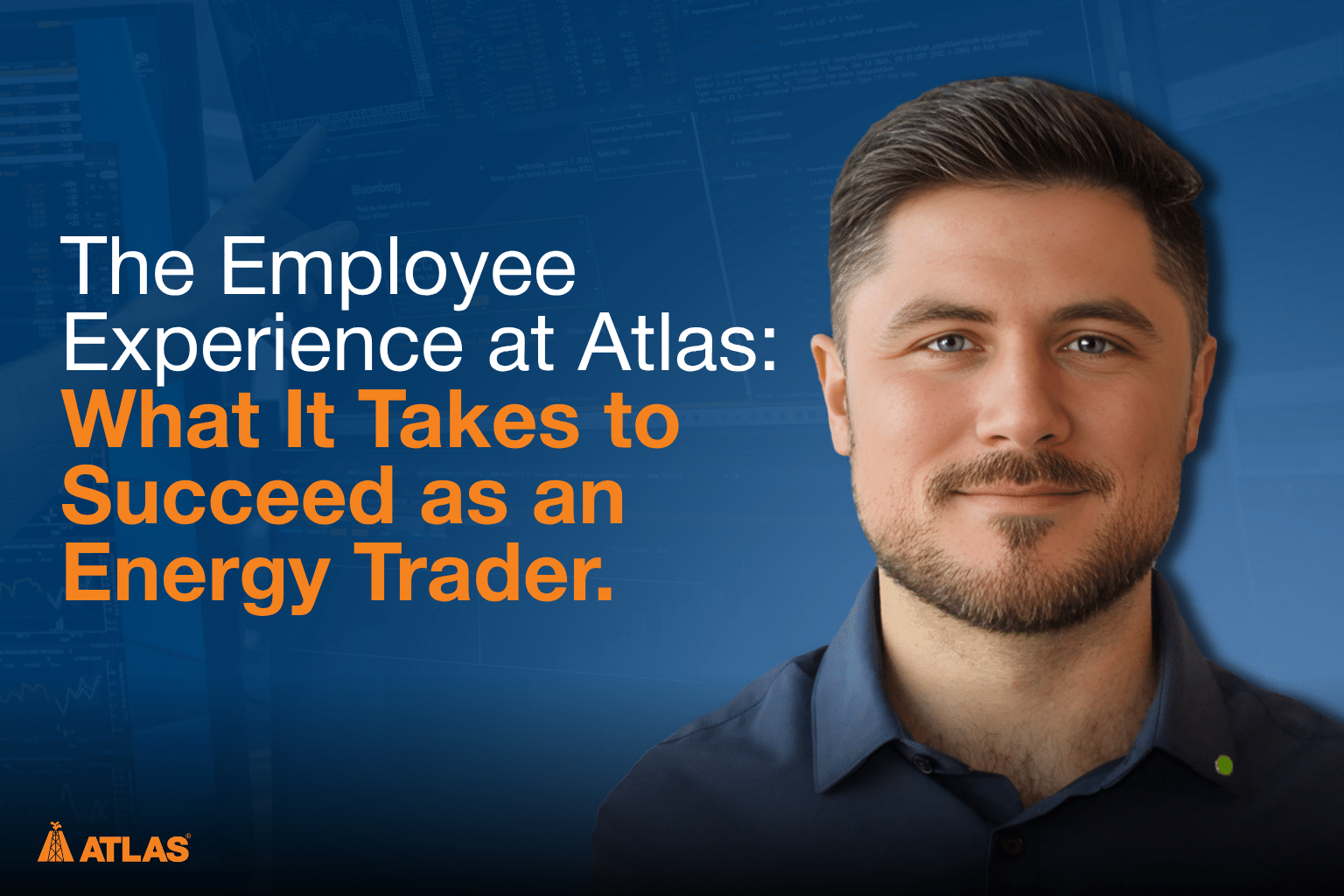
David Olson, recently promoted to the trading desk at Atlas, understands that process as well as anyone. He’s wanted to be a trader for as long as he can remember, and he worked hard to get there.
We sat down with David to talk about his career path, how he prepared for the pace and pressure of the trading desk, and what life is like at Atlas.
Can you share a bit about your background and how you came to Atlas?
I’ve known I wanted to be a trader for a long time. I grew up around people in the industry, and I could see how excited they were about their work—how engaged they were in what they were doing. Even before I got to college, I knew energy trading was what I wanted to pursue.
Trading usually isn’t the first career stop. It helps to get experience across different parts of the industry and build a hands-on understanding of the product.
I started in Texas as a scheduler, managing logistics and supply chains. Then I moved to California and worked as an inspector. From there, I moved back to Texas as a commercial analyst for Pilot, analyzing fuel supply and pricing data. That path ultimately brought me to Atlas’ Houston Office.
By the time I got in touch with Atlas, I felt I had the experience to try my hand at trading, which had always been the ultimate goal.
Had you heard of Atlas? What was the hiring process like?
I’d done business with Atlas a few times while working in energy markets in Texas, and I already had a positive impression of the company. But what really drew me in was how they sold their vision.
When we connected about an opening, they told me: “We’re growing quickly, and we’re ambitious about building something special. If you want to grow in your career, this is a place for you. If you’re willing to work for it, you can build any kind of career you want here—there’s no limit.”
That’s always been my mindset. I knew that if I joined Atlas and showed what I was about, the team would support me in reaching my goals. For people who are ambitious, entrepreneurial, and driven, it’s a culture that rewards that. The people at Atlas will lift you up and help you get there.
Let’s talk about your trajectory at Atlas. How has your career advanced with the company?
I started as a scheduler—that was my way in and a role I had experience in. But they knew my ambition was to be a trader, and from day one, the team was helping me get there.
I spent time sitting with the trading desk, watching how they made decisions and talking through how they evaluated market developments and trades. Atlas is the kind of place where, if you raise your hand and say you’re eager to try something new, they’ll give you that opportunity.
Within six months of starting as a scheduler, I was promoted to trader. Now I’m in the role I’ve always wanted, trading across the mid-continent of the U.S. and up to Chicago.
What is the leadership culture like at Atlas? Do you have exposure to senior decision-makers?
Yes, quite a bit. Whether it’s Sam Simon—the founder and owner—or Michael Evans, the president, they’ll walk right up to your desk and take an interest in what you’re working on.
It doesn’t matter who you are. If you’ve done your research and come to senior leadership with an idea, they’ll sit down with you in a conference room and whiteboard it out. Leadership wants to hear your thought process. They want you to be entrepreneurial, to grow, to succeed. That culture starts at the top and carries through every team at Atlas.
What does collaboration look like at Atlas? Do you work closely with your team?
It’s really important to stay in close touch with your colleagues in a role like this. There’s a lot to track, and everyone brings their own research and insights into the market. This isn’t a job you do on your own.
At the trading desk, we all sit together and are constantly sharing findings, asking questions, and working through problems. I learn from them, and I think they learn from me, too. Everyone is engaged and paying attention.
You want to respect each other’s time, so we try to be resourceful and look for answers on our own first. But if you’ve done your homework, there’s no such thing as a dumb question. Everyone is willing to help, and there’s a real culture of collaboration here.
You talked about the mentorship culture that helped you advance quickly from scheduler to trader. How do you carry that forward?
I’ve had great mentors at Atlas from day one—people who helped me build the language of trading and become fluent in the numbers. The desk has some of the smartest people I’ve ever met, and they’ve been very generous with their time, coaching me through things. I’ve worked at a few places, and it’s not something you see everywhere.
Today, now that I’ve built a strong baseline in trading, I want to be the person that anyone feels comfortable walking up to with a question. Someone who helps them build their own knowledge.
Sitting in a room with a whiteboard and talking through the job is what got me to where I am. I want to be that resource for as many new and younger team members as I can at Atlas.