When starting a career, one of the top questions young professionals consider is where they can find real opportunities for development. Where can they learn, build skills, and position themselves for long-term success?
This is a core focus of Atlas Oil’s culture. Over decades, the company has built an environment where mentorship, skill-building, and career progression are a priority in every role—especially for younger members of the team.
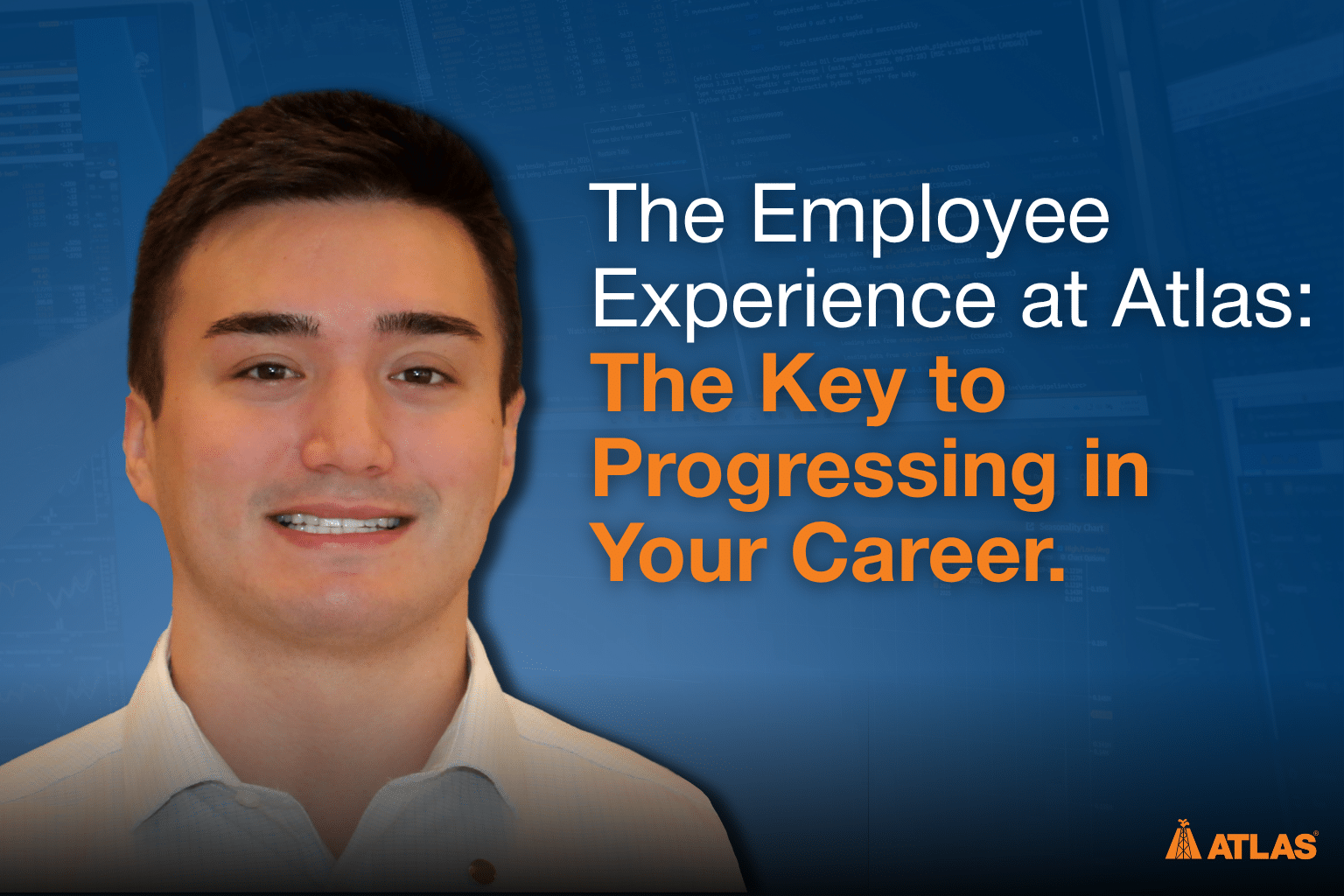
Chayce Grevey, a team member at Atlas who recently progressed from tax analyst to commercial analyst, is a strong example of that development culture in action. By working closely with leaders on his team, he accelerated his growth and moved into a role he didn’t originally have a background in.
We sat down with Chayce to hear how that progression happened—and what it takes to build a career in the energy industry from the ground up.
You started your career as a tax analyst. What does that job involve day to day?
In this industry, the tax analyst is the last line of defense.
A deal starts with the traders and commercial analysts. They’re deciding volume, price, who we’re doing business with. Then, it moves to the schedulers, who handle all the logistics, like shipment and timing. And it ends with the tax team, who are responsible for reconciliation and reporting.
We’re calculating taxes, preparing returns, comparing records, and flagging discrepancies. At a high level, it’s our responsibility to ensure Atlas is paying the right amount—not too much, not too little—across all of its accounts.
What brought you to Atlas as a tax analyst, and what did it take to succeed in that role?
Atlas took a chance on me when they hired me. I had a background in tax and accounting, but I’d never worked specially with motor fuel taxes, and there was a lot to learn.
I trained with my colleagues and was fortunate to find a few strong mentors early on. I asked a lot of questions, and before long, I felt comfortable in the role.
As I took on more responsibility, I started to notice opportunities for refunds across several tax accounts. I reached out to the state, worked through the amendments, and verified the refunds. Ultimately, I brought some money back into the business.
At that point, I felt confident in what I was doing and began asking for opportunities to take on more work. That’s something Atlas really supports: you build your skills, get strong in your role, and then keep progressing.
You’ve recently moved into a commercial analyst role, where you’re working closely with traders. How did that transition come together?
I knew Atlas was a place with real career-building opportunities; you see it across the organization. Anyone can grow into a new role if they show the capability and confidence to take it on.
Early on in my role on the tax team, I focused on delivering tangible value, bringing in smaller refunds that started to build momentum. Over time, those efforts caught attention, including from Sam Simon, our founder and CEO. He mentioned that he saw what I was doing and had something in store for me if I kept it up.
As I continued to build on that success, I eventually landed a significant refund. That result gave me the confidence to take the next step. I approached Sam directly and shared my interest in growing with the company and taking on more responsibility, specifically on the commercial side.
He moved quickly. After speaking with members of the team, he set the transition in motion almost immediately. It reinforced what I had come to believe about Atlas: if you show initiative, back it up with measurable results, and take ownership of your growth, opportunities will follow.
After completing a handoff with my colleagues on the tax team, I officially stepped into the commercial analyst role.
You’ve leaned into the mentorship culture at Atlas. How has that supported your development?
When you come into these roles, you’re a white belt by definition. There’s a lot you can learn on your own, but you have to lean on mentors too. Fortunately, Atlas has a lot of senior people who are genuinely invested in helping younger employees develop.
My managers took me under their wing with a “no dumb questions” mindset, which made it easy to learn. At the same time, they didn’t take it easy on me. You can lead a horse to water, but you can’t make it drink. They helped me build the foundation, then gave me the space to apply it and pressure-test it on my own. That’s how I built confidence.
If I had to explain Atlas’s mentorship culture to someone who hasn’t experienced it, I’d say you’re much closer to senior leadership than you’d expect. It doesn’t matter if you’re in the front office or back office, junior or more experienced—you’re interacting directly with the CEO, the president, and others. That leads to mentorship opportunities you don’t get at most companies.
Last question: if you had to share one piece of advice with someone in their 20s just starting at Atlas, what would it be?
Ask questions.
Even if you’re a bit more reserved by nature, it pays to come out of your shell and engage with your colleagues. People at Atlas are genuine—they want to teach, and they want to see you succeed.
It’s the kind of place where you can build any career you want, if you’re willing to put in the work. And it starts by leaning on the people around you. There’s a lot of experience here, and a lot of opportunities to soak up your colleagues’ wisdom. That’s what’s made the biggest difference for me.