
Power plants are generally designed with dual-fuel capabilities, allowing them to run on natural gas or oil.
Natural gas is their primary source of fuel, owing to its efficiency and abundance. But at times, it becomes too expensive or difficult to secure in sufficient volumes, and plants turn to oil to keep operations running. This is especially true during peak demand periods, such as winter storms.
This flexibility requires a reliable fuel supply partner, like Atlas Oil. Atlas sources product from refineries, manages pricing and timing, and blends and delivers fuel—ensuring it is available where and when it is needed.
This winter, when natural gas prices spiked in the Northeast, oil became the more economical and reliable option for power plants. Here’s how Atlas expanded its sourcing network to meet that demand and maintain uninterrupted power.
The Challenge: Meeting Record Demand in a Price-Driven Market
Atlas has long worked with utility customers in the Northeast, where energy demand is highly seasonal. From October through March, consumption rises sharply, and power plants for sudden increases in demand.
Fall and winter 2025 brought added pressure. Cold weather and winter storm forecasts drove record demand across the region, and natural gas futures rose sharply. Power plants would require more fuel oil than is typical for the season.
In the months leading into peak demand, Atlas anticipated these conditions—and the need to secure additional supply quickly. Traditional sourcing channels were likely to come under strain, raising the risk of outages. To ensure it could serve its customers reliably, Atlas expanded its sourcing strategy and turned to cargo import.
The Response: Executing and Distributing an Import Cargo
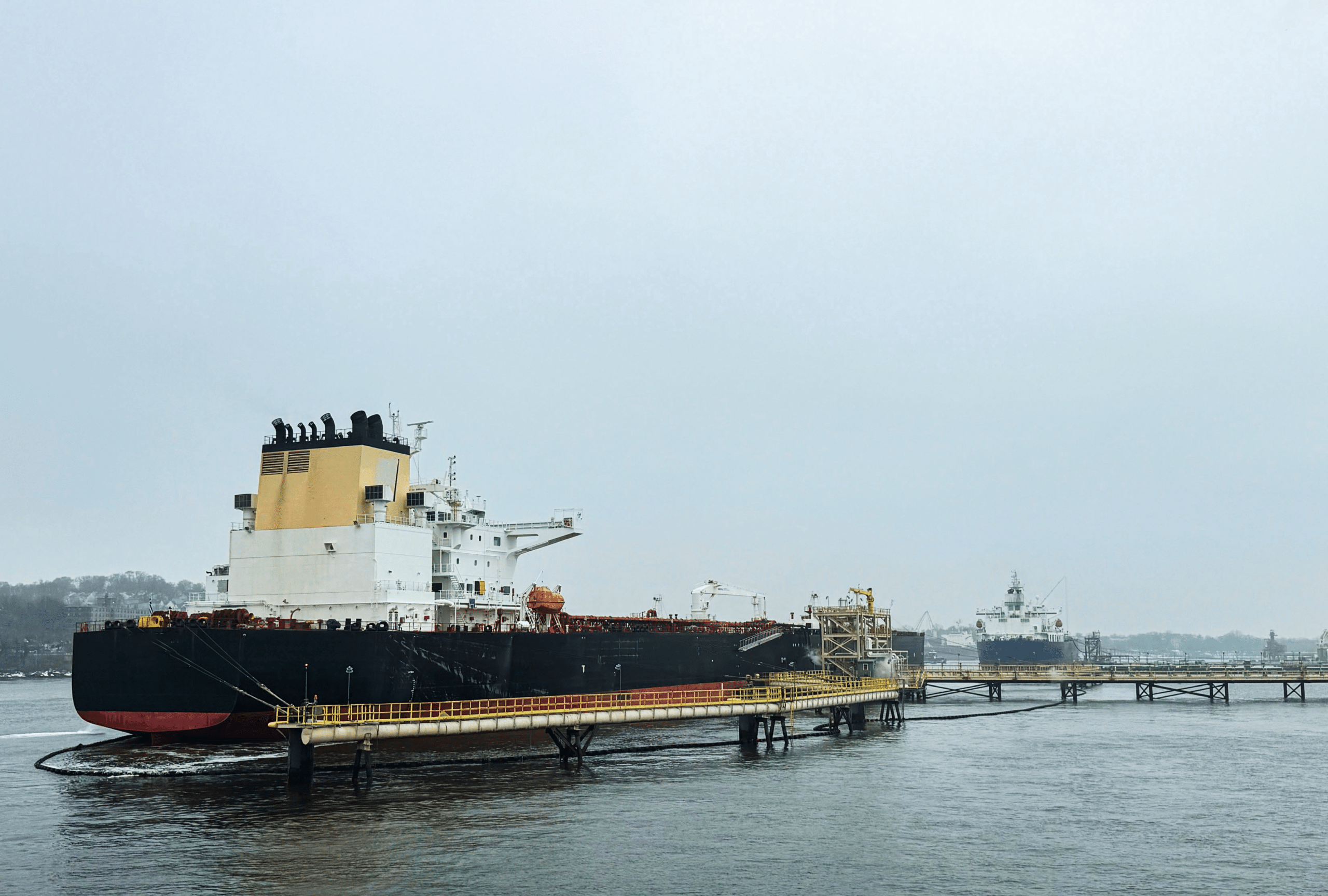
To secure additional supply, Atlas sourced a full cargo of fuel oil from the global market and arranged for delivery into New York Harbor. The opportunity was identified and executed quickly, with the team evaluating and leasing the ship within a matter of days.
The cargo was delivered into New York Harbor, navigating the waterway’s infrastructure and navigation constraints. It was a first for Atlas, and the process ran smoothly end to end.
Once the cargo arrived, Atlas integrated it into its existing supply network. Product was offloaded into storage and sold out in portions to multiple power plant customers. From there, fuel was distributed across the region using a combination of trucking and rail, extending supply to both coastal and inland facilities.
The Outcome: Reliable Supply During Peak Season
Atlas successfully supplied fuel to multiple power generation customers during a period of historic demand, enabling them to operate on a lower-cost fuel source without disruption. While some plants outside the Atlas network faced supply constraints, Atlas customers maintained consistent access to product throughout peak season.
“At Atlas, we’ll run through walls for our customers. When we projected a demand spike, it didn’t matter that it meant trying something new or expanding our supply channels. We were going to do whatever it took to be our customers’ most reliable partner,” said Alex Kopko, a Refined Products Trader at Atlas.
This is one example of a broader shift in how Atlas approaches sourcing. Historically, the business has operated primarily within a domestic, delivery-oriented model. Today, Atlas has the capability to move further upstream—utilizing large wholesale cargoes as flexible inventory positions.
“We are a fully integrated fuel supply and trading house,” said Michael Evans, President of Atlas Oil. “This is the latest example of our leadership across the supply chain: bringing in product at scale and managing it through to end use.”
For more examples of Atlas’ work, read how the company kept production running at a large food manufacturing facility during one of Texas’s harshest winter events in years.