Atlas has grown into one of the world’s leading energy trading businesses. The company sources commodities from global markets while managing supply and price risk, so customers have dependable access to energy at predictable costs.
It’s a round-the-clock operation, with experienced traders tracking markets and timing purchases across dozens of products and regions.
Trading is a natural extension of Atlas’ roots in fuel distribution and logistics. But building this business meant developing the expertise, talent, and systems to compete with established commodities and financial firms around the world.
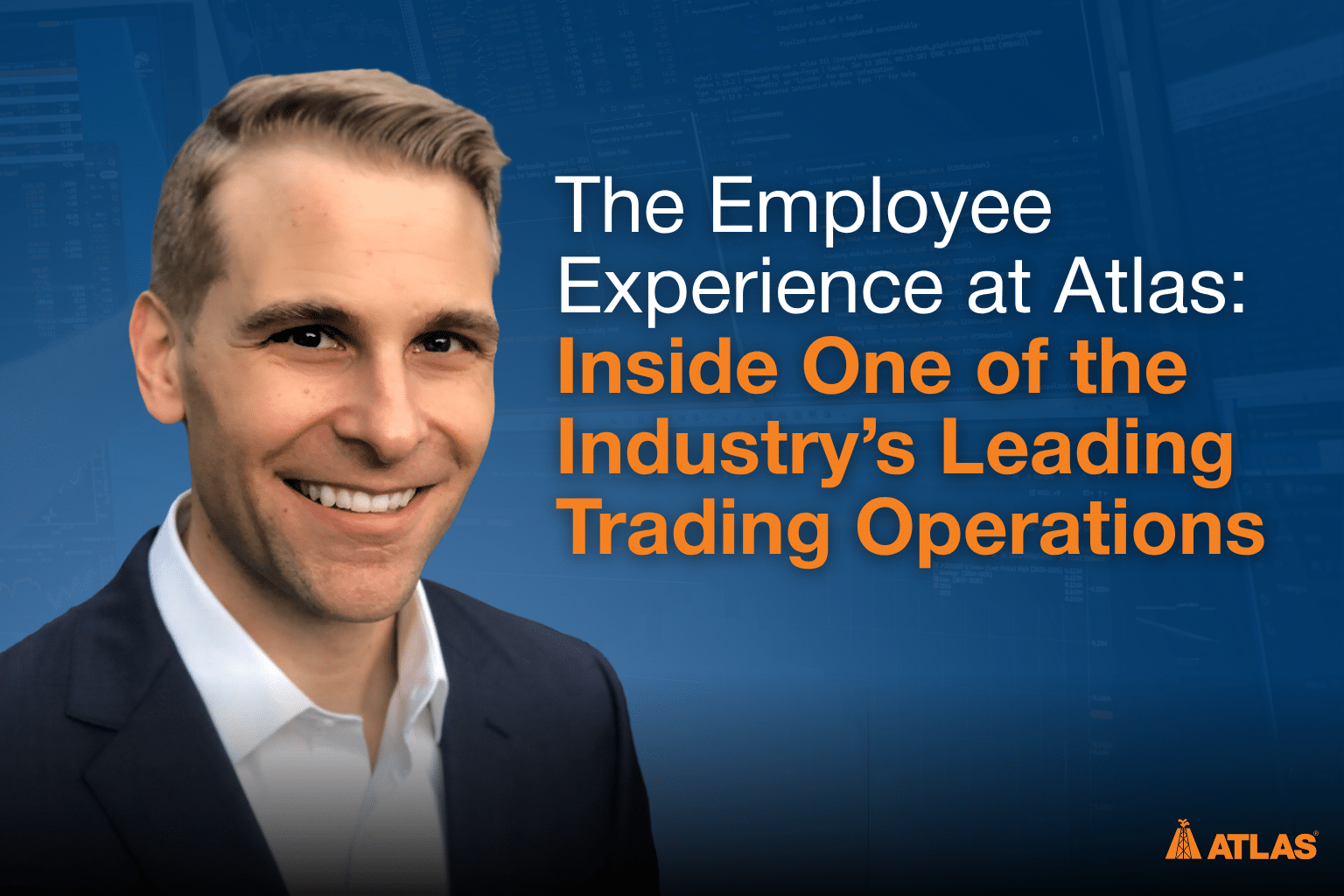
One of the key figures in that effort was Eric Francis, Vice President of Products and Renewables. A seasoned trader, he led the buildout of Atlas’ trading floor and book of business. We sat down with Eric to discuss what it takes to build a leading trading platform and where he sees the business heading next.
You’ve worked at some of the largest energy supply businesses in the world. What brought you to Atlas?
Atlas is the best entrepreneurial platform for traders in the industry.
I came here because there were no limitations on what I could build. No ceiling on the book of business; no constraints on the team. Sam (Simon) trusts his people, and that makes him a great leader to work for.
More specifically, I had experience across multiple commodities, and I knew Atlas was serious about expanding its trading capabilities. I wanted a platform that would support my own growth and eventually let me play a role in developing junior traders and customer relationships across the organization. Atlas was a natural fit.
I’ve been here four years now, and we’ve built out a dozen new physical trading businesses. It’s hard to sustain and grow that amount of business without also developing talent in house. We have the resources and culture to help people hit the ground running—and that’s a big part of why we’ve grown the way we have.
How have the trading capabilities at Atlas grown during your tenure?
The business looks very different than it used to. We’ve brought in traders from the best refining and trading companies in the world, and they’ve helped us grow considerably—in both capabilities and volume.
A lot of that is thanks to how Sam empowers his people. When a company brings in talented traders, they need to know how to utilize them. At Atlas, that means letting them do what they do best. We put the power of our platform behind the people we believe in, and we don’t get in their way.
I’ve been around a lot of companies. Many of them are stifled by hierarchy. Atlas is not. If you come in and perform, there’s no ceiling on how far you can go. You’ll be given the resources and the latitude to grow as much as you’re capable of growing.
Talented people, a flat organization, and a platform that’s built to support them. That’s our formula.
How is the experience of working with junior traders?
It’s one of the best parts of the job.
I get to watch people come out of the middle office, the back office—lots of different roles—and take on the challenge of trading. We give them the guidance and the tools, but it’s their passion and hard work that makes them succeed.
This is a hard job, and not everyone makes it. But in my four years at Atlas, we’ve had a lot of success with junior traders. We understand people, we have a strong culture, and we have the systems and analytics to support them. Put that together, and you have a remarkable engine for young talent.
Atlas’ trading business has grown quickly. What does the team have to balance as it expands?
One thing we remind ourselves of constantly is that it’s okay to slow down and make sure you’re not missing anything. We work in an industry where risk exposure, compliance, and reporting must be taken seriously. When companies grow fast, there’s always a risk that those items take a backseat.
The culture at Atlas is what keeps that from happening. We understand the importance of staying disciplined.
The other consideration is staffing. We’ve historically kept our teams lean, which lets us stay nimble and avoid the bureaucracy that slows the biggest trading shops down. But we also understand the importance of building out our bench—so that’s where we’re investing now. We’re bringing more people into an engine where we’ve seen a lot of success, and we want to make sure we have the talent to sustain it.
Last question: if you had to share one piece of advice with someone in their 20s just starting at Atlas, what would it be?
The power of networking.
Internally, we’ve accumulated a lot of very smart, very experienced people—and our culture is collaborative. Talk to your boss. Talk to the trader sitting next to you. Bounce ideas off them, work through problems, ask for advice. That’s what this business is all about. It’s how you learn, and how you stay on top of what’s happening in the market.
Externally, meeting people in the industry is how you build your book of business. And as I’ve said, there’s no limit to how far you can go at Atlas—but you have to get out there and work for it.
Networking and conversation. Get out, meet people, and learn.