In many ways, entrepreneurialism is the defining feature of Atlas Oil’s culture. It’s what enabled Sam Simon to grow a one-truck fuel delivery business into one of the world’s leading energy supply companies. And it’s what continues to inspire the Atlas team today.
That entrepreneurial spirit shows up across the organization—from the way employees grow into unfamiliar roles to the team’s tireless approach to customer service. But it’s most evident in Atlas’ efforts to challenge convention and find better ways to serve customers.
When faced with a challenge, Atlas doesn’t simply accept the status quo. Teams are encouraged to question whether the industry-standard way of doing something is truly the best way. And when a better solution doesn’t exist, they’re encouraged to invent one.
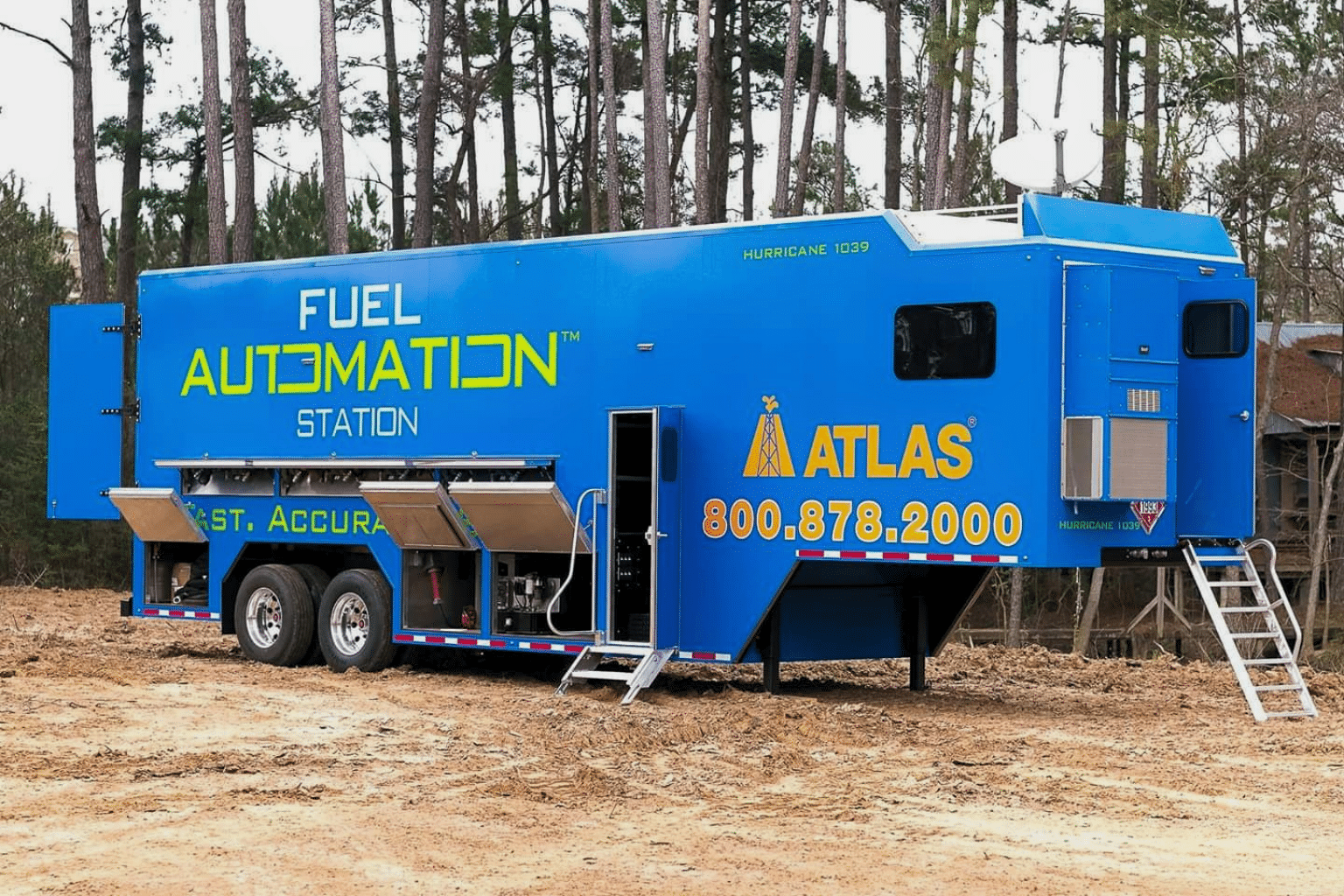
One of the key examples of entrepreneurialism in Atlas’ history is Fuel Automation Station: a technology that changed frac fueling for energy supply businesses.
Entrepreneurship in Action at Atlas
For many years, fueling equipment at frac sites was a slow and labor-intensive process. Operators had to transport fuel through busy work sites and manually coordinate refueling around active (and often hazardous) heavy machinery. The process carried safety risks, required significant manpower, and created inefficiencies for customers.
Most companies treated these challenges as an inevitable part of frac fueling. Until an Atlas engineer in Victoria, Texas saw an opportunity to redesign the process.
The engineer envisioned a multi-hose fueling system capable of supplying fuel to numerous pieces of equipment at the same time. It would serve as a centralized hub for a frac site—remaining connected to multiple pumps simultaneously, continuously monitoring fuel levels, and automatically delivering fuel where it was needed.
In effect, it would transform frac fueling from a series of manual refueling events into a single, coordinated operation.
It was an ambitious idea—one that would require significant investment and engineering expertise to bring to life. When Sam Simon, Chairman and CEO of Atlas, visited Victoria, the engineer pitched him the concept. The two spent the next hour at a whiteboard sketching out what would become the blueprint for execution.
In the months that followed, Atlas funded the project and empowered the engineer to lead the development of a landmark new fueling technology.
The Idea That Became a Company
Today, Fuel Automation Station holds more than 25 patents and has evolved from an internal innovation into an independent technology company serving the energy industry.
The system is deployed across Atlas’ frac fueling operations—where it’s helped hundreds of customers operate more efficiently and minimize fuel-related disruptions. FAS now captures more than 500,000 data points each day, giving Atlas customers real-time visibility, superior operational control, and a system engineer for 100 percent uptime in the field.
The engineer behind FAS later became a leading equity holder in the technology, ensuring the value created by the innovation flowed not only to customers and the business, but also to the team member who conceived it in the first place.
The development and adoption of FAS is a fitting example of how entrepreneurship works at Atlas. Employees are encouraged to think like owners, challenge conventional wisdom, and pursue better solutions. When they bring a compelling idea to the table, they’re supported by a management team that is eager to bring it to life.
As Michael Evans, President of Atlas Oil, recently put it: “The entrepreneurial mentality that Sam had when he founded Atlas has trickled down through the whole organization. You see people here with a lot of drive and curiosity, and that’s a big part of what makes the employee experience so unique.”
For more on Fuel Automation Station and its impact on the industry, visit its website.
For more on Atlas Oil’s entrepreneurship in action, read “Inside Atlas Oil’s Culture with President Michael Evans.”