
Over the last five years, four major storms have cut more than 15 billion cubic feet per day of U.S. natural gas production. In 2021, that led to more than 26 million Texans, or 75 percent of the state, losing power.
These outages affect not only homes, but also hospitals, manufacturers, distribution facilities, and data centers. A production shock of this size carries significant economic and public safety consequences.
Storms like these were once treated as black swans. The southwestern region traditionally saw minimal disruptions from extreme weather, but what once felt “extreme” is starting to look less rare.[1]
Deep freezes, bomb cyclones, and heavy snowfall are becoming more common, especially in parts of the United States that haven’t historically faced winter weather.[2] For energy consumers, that now means planning for disruption and be ready to operate through it.
Let’s look at the challenges consumers confront during extreme weather—and how our industry can meet them head-on.
Pressure Points for Fuel Suppliers in Severe Weather
When people think about weather-related outages, they may picture a downed power line. The greater vulnerability is oil and gas. Natural gas is the country’s largest source of electricity, and demand rises during winter storms. Consumers use more power, and power plants need more fuel to generate it. This dual strain is known as a coincident peak.[3]
When extreme weather disrupts the production or sourcing of fuel during those peaks, the system falters. That’s what has driven the widespread failures seen in recent winters.
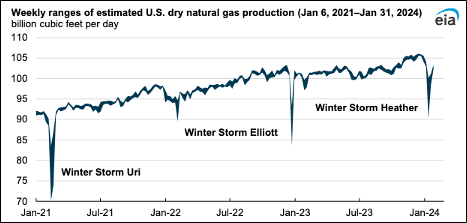
Graphic Source: U.S. Energy Information Administration; Data Source: S&P Global Commodity Insights[4]
Not every weather-related disruption falls within the control of a fuel supplier, but many do. We can prepare drivers and trucks for difficult road conditions, keep crews on call to repair and maintain equipment when something breaks, and maintain reserve supply, so operations aren’t overly dependent on a single production source.
These steps won’t solve everything. If transmission lines go down, or another link in the supply chain fails, there are limits. But suppliers carry real responsibility. When we strengthen each part of our process, from sourcing and storage to transportation and on-site management, we reduce risk for customers who rely on steady fuel supply.
That all starts with acknowledging reality. Massive winter storms are no longer black swan events—even in Texas, where Atlas is headquartered. They’re part of the operating environment, and they need to be planned for accordingly.
A Case Study in Winter Readiness
Atlas’s recent experience during Winter Storm Fern, which left one million people across the Southeast without power, offers a useful example.[5]
A major food production facility reached out on the eve of the storm, anticipating critical fuel supply disruptions. There was no time to build contingencies. It was a situation that demanded preparation well before the forecast turned.
Atlas moved immediately. The company’s operations are positioned across its operating regions so someone can be on-site quickly when a severe storm hits. In this case, an engineer and operator arrived within two hours to confirm exactly what equipment would be needed to maintain uninterrupted supply.
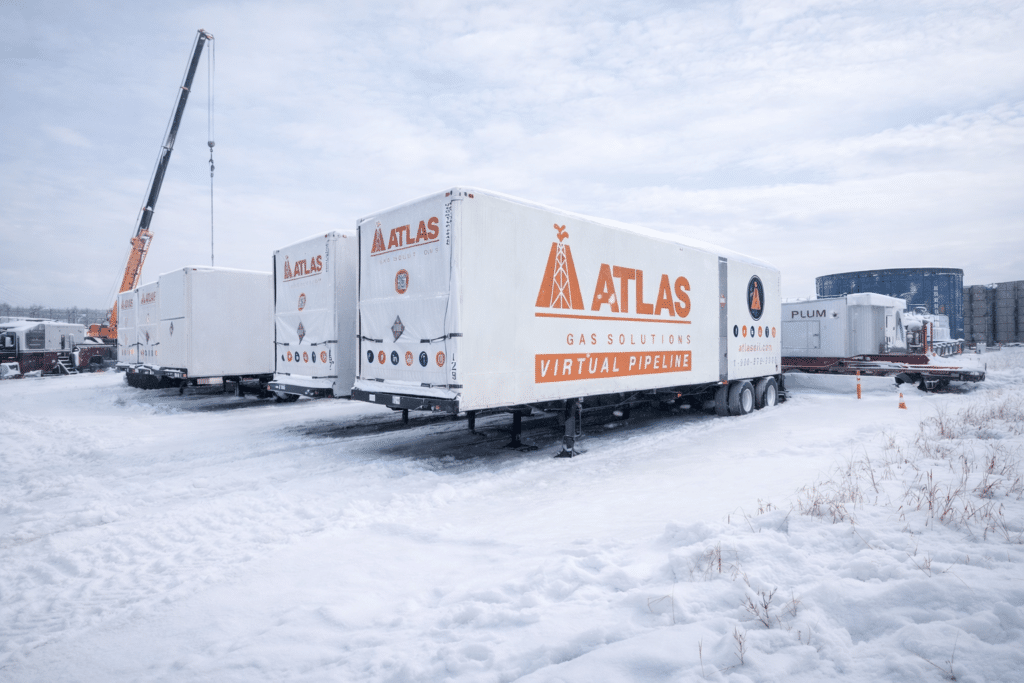
At the same time, compressed natural gas trailers had been filled and staged in advance. Drivers were ready to roll before road conditions deteriorated. By positioning assets early and hardening equipment for freezing temperatures, Atlas reduced exposure to the bottlenecks extreme cold creates.
Those preparations proved decisive. Within 17 hours of the initial call, the system was installed and gas was flowing. The facility remained online throughout the storm, even as the region experienced widespread outages.
Planning for the New Operating Environment
Severe winter storms were once a plausible excuse for a fuel supplier’s operations to unravel. That is no longer the case. Whether you’re based in Houston or Boston, extreme freezes and heavy snowfall are part of the operating environment. The question is how we prepare.
There are concrete steps fuel suppliers can take to ready their teams, equipment, and customers for severe weather. That includes investing in preparation, including diversifying supply, staging reserves, training crews, and planning for coincident peaks before they happen. Atlas Oil has made these investments—and as winter storms have intensified, our ability to support customers through them has strengthened as well.
This same perspective carries into how Atlas approaches pricing, explored in Why Fuel Pricing Is a Service, Not a Number.
[3] https://www.wri.org/insights/how-can-US-avoid-winter-storm-blackouts
[4] https://www.eia.gov/todayinenergy/detail.php?id=61563
[5] https://www.nesdis.noaa.gov/news/noaa-satellites-monitor-massive-winter-storm
Stay Connected with Atlas Oil Company
Be the first to hear about new case studies, industry insights, and behind-the-scenes updates that show how we’re shaping the future of energy.