
In recent years—as winter storms and geopolitical disruptions have become more frequent—a sense of pessimism has crept into energy conversations. Power supply failures are assumed to be inevitable. When trouble hits, the thinking goes, there’s little the industry can do but ride it out and hope for the best.
That assumption is wrong.
The overwhelming majority of fuel supply failures aren’t the result of production shutdowns or impassable roads. They’re coordination failures. And coordination failures are solvable, particularly by suppliers with the right systems in place.
There are, of course, exceptions. But a fuel supplier with true end-to-end preparedness can keep supply moving under nearly any operating condition. Here’s how.
What “Supply Disruption” Really Means
Fuel disruptions are generally attributed to a familiar set of causes: refinery or pipeline constraints, equipment failures, poor transportation conditions. Those issues do happen regularly, but on their own, they rarely explain why fuel didn’t flow when it was needed.
Fuel supply systems are built with redundancies. Production and transportation networks overlap. Significant storage reserves exist. A disruption in one area, or even several, shouldn’t automatically translate into an outage downstream.
What turns disruption into failure is the inability to coordinate.
A supplier may have access to product, but not be positioned close enough to their customers. Fuel might be stored in the right region, but allocated to the wrong contracts. Transportation may not have been scheduled early enough to avoid deteriorating conditions.
In most cases, the issue isn’t that fuel doesn’t exist. It’s that decisions weren’t made early enough, or across the right parts of the network, to manage challenging operating conditions.
Coordination Starts Long Before an Event
Preparation for a crisis begins upstream.
The best suppliers maintain diversified sourcing relationships, rather than relying on a narrow set of refineries or pipelines. This materially improves their ability to maintain supply continuity. While some crises affect the entire network, disruptions more often concentrate in specific regions or assets.
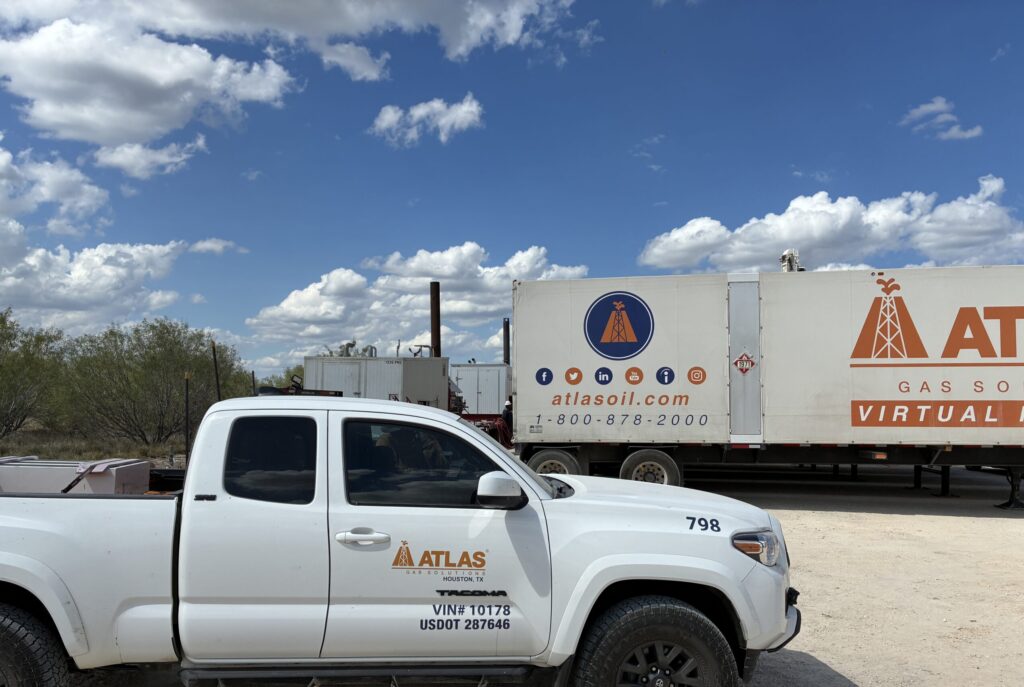
Atlas Oil, for example, has a sourcing network that spans domestic refiners and global counterparties. That breadth doesn’t eliminate risk, but it increases the likelihood that product remains accessible when stress hits the supply chain.
Preparedness also extends to physical positioning. Access to fuel means little if it sits too far from demand. Suppliers must have access to terminals and racks across major markets, so supply can be repositioned quickly as conditions change. That flexibility is a critical contingency.
Finally, storage: the ultimate fail-safe. Fuel held in reserve can bridge short-term production slowdowns and keep deliveries moving while upstream issues are resolved. Without robust, interoperable fuel reserves, a supplier will struggle to absorb disruptions.
Each of these elements—access, positioning, and storage—is key. But preparationalso depends on how they are configured for each customer’s operating environment. Atlas Oil has this infrastructure in place, yet it still approaches supply planning on a case-by-case basis. Rather than operating from a single standardized playbook, the company develops operational protocols around the specific needs of each customer, facility, and region.This is the final step.
Execution Is Where Many Breakdowns Occur
Preparation is the most important step in preventing fuel coordination failures. A close second is execution: how a supplier responds when trouble strikes.
A recent winter storm in Texas offers a relevant example. When the state declared an emergency and a large manufacturing facility required fuel, Atlas’ team worked through the night to engineer a plan and mobilize resources. More often than not, that’s what effective execution requires.
That kind of response is resource-intensive. It requires teams operating around the clock, rapid equipment deployment, and a supplier willing to commit significant operational capacity in a short window.
For fuel-intensive businesses, you should be asking yourself: do you trust your supplier as much at 3:00 a.m. as you do at 3:00 p.m.? Even if they advertise themselves as a 24/7 operation, it’s worth stress-testing those capabilities with a few follow-up questions. Disruptions don’t wait for business hours, and you need a partner with true, full-service execution capabilities at any time, on any day.
Integration is another important consideration. If functions like engineering, logistics, and dispatch are outsourced or fragmented, delays are inevitable. When stress hits the supply chain, there’s no time for handoffs—and suppliers that operate as an end-to-end unit are the ones that keep fuel flowing.
Failure Isn’t “Inevitable” With the Right Supplier
None of this is to deny that extreme events exist. There are conditions under which supply truly cannot move. But those scenarios are far rarer than many assume. Most fuel failures attributed to “unavoidable disruptions” are, in reality, the result of fragmented systems. They are failures of coordination, not of supply.
Integrated suppliers are, in general, structurally better equipped to perform during periods of volatility. They have multiple ways to source fuel, multiple places to store it, and multiple routes to move it. But a deeper advantage lies with suppliers who can adapt those capabilities around the specific needs of each customer and operating environment—and do so in real time. That is what decides whether stress is absorbed within the supply chain or passed on to the end customer.
As disruptions become more frequent and visible, the industry faces a choice: accept outages as inevitable, or invest in operating models designed to prevent them. A better path forward exists.
For more insights, read The Atlas Difference: Inside a National Leader’s Fuel Supply Network.
Stay Connected with Atlas Oil Company
Be the first to hear about new case studies, industry insights, and behind-the-scenes updates that show how we’re shaping the future of energy.